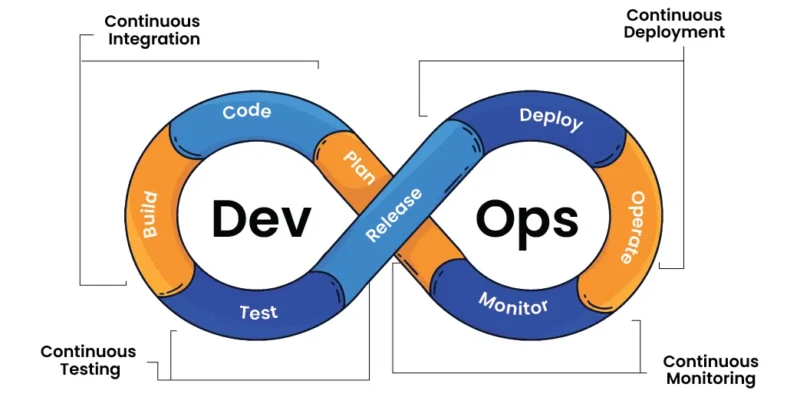
In today’s fast-moving world of software development, DevOps is an important approach. It brings developers and operations teams together, helping them work as one. This teamwork makes building, testing, and releasing software faster, smoother, and more reliable.
DevOps is not just about tools — it’s about culture, practices, and smart use of technology. It helps companies release better applications, reduce errors, and adapt quickly to changes. In this guide, we’ll look at the main ideas of DevOps, its benefits, the tools you can use, and how businesses can put it into action for real results.
Comprehending DevOps
DevOps comes from the words “Development” and “Operations.” It is a way of working that focuses on making the software development life cycle faster and more efficient. DevOps focuses on continuous integration and delivery (CI/CD). It also emphasises automation and fosters a strong culture of teamwork and collaboration.
Key Concepts of DevOps:
Cooperation and Interaction:
DevOps bridges the gap between designers and operational groups, urging open interaction. This shared responsibility results in far better problem-solving and more efficient processes.
Automation:
Automation is at the heart of DevOps, streamlining recurring jobs like screening, deployment, and tracking. This decreases human mistakes and speeds up the development procedure.
Continuous Integration and Continuous Delivery (CI/CD):
CI/CD often involves combining code to become a main database adhered to by automated screening and deployment. This ensures a smooth combination and dependable release.
Infrastructure as Code (IaC):
IaC entails handling facilities through code manuscripts, making sure of consistency and scalability while minimising the danger of configuration errors.
The Benefits of DevOps.
1. Faster Time to Market:
DevOps significantly reduces the time required to provide new features and updates, permitting businesses to react quickly to market demands. Automation and streamlined processes contribute to this speed.
2. Enhanced Quality and Dependability:
Continuous screening and monitoring guarantee that software is thoroughly vetted before deployment, leading to fewer bugs and even more trusted releases.
3. Enhanced Safety:
DevOps integrates protection methods into the development process (DevSecOps), making sure that protection is considered at every phase. Automated safety and security screening helps determine vulnerabilities early.
4. Scalability and Adaptability:
With IaC and cloud-native tools, DevOps helps manage infrastructure easily and flexibly. This lets teams respond quickly to changing needs.
Important DevOps Devices and Technologies.
1. Version Control Equipment:
Git is the most commonly used version control system, enabling teams to collaborate on code and track changes effectively.
2. CI/CD Tools:
Jenkins, CircleCI, and GitLab CI/CD are preferred tools for automating the build, examination, and implementation processes.
3. Configuration Management Equipment:
Ansible, Creature, and Chef help manage system arrangements and automate provisioning.
4. Containerisation and Orchestration:
Docker and Kubernetes are necessary for containerising applications and managing their release, scaling, and management.
5. Monitoring and Logging Tools:
Prometheus, Grafana, ELK Stack (Elasticsearch, Logstash, Kibana), and Splunk provide insights into application performance and aid in fixing problems.
Implementing DevOps: Best Practices.
1. Start Small and Scale:
Begin with a pilot project to show the worth of DevOps techniques. Once proven effective, gradually scale these methods across the organisation.
2. Foster a DevOps Culture:
Encourage collaboration, continual discovery, and shared responsibility amongst advancement and operations groups. This social change is critical for effective DevOps adoption.
3. Automate Everything:
Automate as many procedures as feasible, from code combination and testing to implementation and surveillance. Automation is key to attaining the speed and integrity that DevOps pledges.
4. Action and Enhance:
Usage metrics and KPIs to measure the effectiveness of DevOps techniques. Continually seek means to enhance procedures based upon these insights.
5. Incorporate Safety:
Make security a key part of the DevOps process (DevSecOps). This ensures that security checks are automated and ongoing. This aggressive technique helps alleviate threats early in the advancement cycle.
Common Difficulties and Solutions
1. Cultural Resistance:
Adjustment can be difficult, specifically in companies with recognised procedures. Advertise the advantages of DevOps and offer training and support to relieve this change.
2. Device Assimilation:
Integrating numerous DevOps tools can be complex. Select devices that are compatible with each other and guarantee they fit well with your existing procedures.
3. Ability Spaces:
DevOps needs a combination of advancement and operations skills. Buy training and work with the appropriate skills to bridge any skill gaps.
Study: A DevOps Success Story.
XYZ Technology, a software development firm, decides to adopt DevOps. This helps improve its product delivery. Originally, they dealt with challenges with lengthy launch cycles and frequent post-deployment concerns. Using CI/CD pipelines and automating tests improved teamwork between development and operations. This change cut their launch cycles from months to weeks. Also, the quality of their releases improved a lot, with users reporting fewer bugs. This makeover not only increased their team’s morale but also boosted consumer contentment.
Conclusion.
DevOps has changed the way modern software is built. It gives teams a smart and flexible way to deliver high-quality applications faster and with fewer mistakes. DevOps helps businesses stay competitive in today’s digital world. It does this by bringing together development and operations. It uses automation and includes security at every stage.
When companies use DevOps, they notice big gains in speed, reliability, and customer satisfaction. To get the best results, you also need the right support. We provide DevOps consulting, support and maintenance services. These help you set up, run, and optimise your processes.
As the tech industry grows, businesses that adopt DevOps with expert help will thrive and succeed.